
This post may contain affiliate links. If you make a purchase through these links, a commission may be earned at no additional cost to you. We only recommend products and services that have been personally tested and are believed to provide genuine value to our audience.
Managing event access can feel like a constant race against security threats and outdated processes. Fintech solutions are reshaping ticketing with blockchain and digital wallet technologies, giving organizers worldwide new ways to create secure, efficient entry systems. As these tools reduce fraud and optimize payments, the article highlights practical innovations that help you build safer, more transparent, and user-friendly experiences for every attendee.
Table of Content
- Fintech’s Core Function in Modern Event Access
- Key Technologies Powering Event Ticketing
- Streamlining Entry: Payments and Verification Systems
- Fraud Prevention and Data Security in Events
- Cost, Compliance, and Common Integration Challenges
Key Takeaways
| Point | Details |
|---|---|
| Fintech Enhances Security | Technologies like Blockchain and Multi-Factor Authentication improve ticket security and user verification. |
| Real-Time Fraud Prevention | AI and machine learning are crucial in identifying and combating fraudulent activities in event ticketing. |
| Seamless User Experience | Digital wallets and biometric systems streamline ticket management and validation for attendees. |
| Compliance and Integration | Adapting to regulatory compliance and integrating various platforms are essential for successful fintech deployment in events. |
Fintech’s Core Function in Modern Event Access
Fintech has transformed event access by introducing sophisticated digital technologies that streamline financial transactions and user verification processes. Digital financial transformation enables event organizers to create more secure, transparent, and efficient entry solutions for participants worldwide.
The core functions of fintech in modern event access encompass several critical capabilities:
- Secure Payment Processing: Enabling instant, encrypted financial transactions
- Digital Ticket Distribution: Creating verifiable, transferable digital tickets
- User Authentication: Implementing multi-factor identification methods
- Real-time Fraud Prevention: Using AI and machine learning to detect suspicious activities
These technological innovations fundamentally reimagine how people interact with event entry systems. Blockchain technologies and digital wallets now provide unprecedented levels of security and convenience, allowing seamless access management that was impossible just a decade ago.
Pro tip: Implement multi-layered authentication protocols to maximize both user convenience and security in your event access systems.
Key Technologies Powering Event Ticketing
Event ticketing has undergone a radical transformation through cutting-edge technologies that provide unprecedented security and user experience. Blockchain technologies are revolutionizing how event tickets are created, distributed, and verified across global platforms.
The most critical technologies driving modern event ticketing include:
- Blockchain: Creating immutable, verifiable digital ticket records
- Smart Contracts: Automating ticket sales and transfer processes
- Artificial Intelligence: Detecting potential fraud and managing ticket authenticity
- Digital Wallets: Enabling seamless, secure ticket storage and transfer
- Biometric Verification: Enhancing user authentication and preventing ticket fraud
These technologies work synergistically to address long-standing challenges in event access management. Digital tokenization transforms traditional ticketing by ensuring each ticket becomes a unique, traceable digital asset with built-in ownership protocols. This approach dramatically reduces scalping, enables transparent resale mechanisms, and provides event organizers with unprecedented insights into ticket lifecycle and audience dynamics.
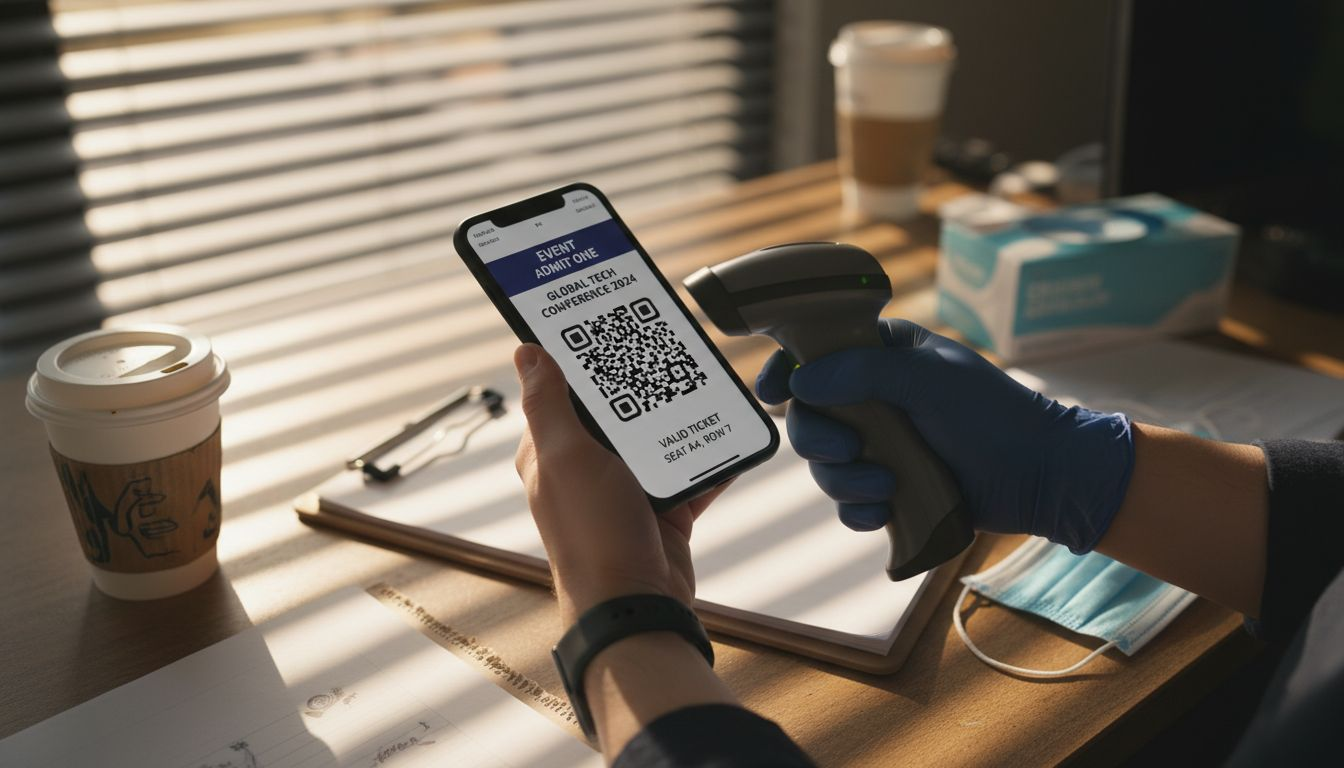
Here’s a summary of how key fintech technologies impact event ticketing operations:
| Technology | Primary Benefit | Business Impact |
|---|---|---|
| Blockchain | Ensures ticket authenticity | Reduces fraud, enables tracing |
| Smart Contracts | Automates transactions | Boosts efficiency, lowers errors |
| Digital Wallets | Simplifies ticket management | Enhances user experience |
| Biometric Systems | Verifies attendee identity | Increases security, prevents abuse |
| AI & ML | Detects suspicious behavior | Minimizes scalping, saves costs |
Blockchain technology represents a fundamental shift in how we conceptualize ticket ownership and transfer, moving from centralized control to a distributed, transparent ecosystem.
Pro tip: Implement multi-factor authentication and blockchain verification to create the most secure and user-friendly ticketing experience possible.
Streamlining Entry: Payments and Verification Systems
Modern event access technologies have revolutionized how attendees enter venues, creating seamless and secure entry experiences. Contactless verification systems have transformed traditional check-in processes by enabling rapid, efficient authentication methods that prioritize both security and user convenience.
The most innovative payment and verification technologies include:
- Mobile Wallet Integration: Enabling instant digital ticket purchases and storage
- Biometric Scanning: Providing advanced user authentication
- QR Code Technology: Facilitating quick and secure entry validation
- NFC-Enabled Tickets: Supporting contactless and paperless entry
- Real-Time Fraud Detection: Preventing unauthorized ticket transfers
These technologies work together to create a comprehensive ecosystem of secure event access. Digital payment platforms now offer unprecedented flexibility, allowing attendees to purchase, transfer, and validate tickets through multiple channels with minimal friction. The integration of artificial intelligence and machine learning further enhances these systems by providing predictive fraud prevention and personalized user experiences.
Cutting-edge verification technologies are transforming event entry from a potential bottleneck into a smooth, instantaneous process that enhances overall attendee satisfaction.
Pro tip: Implement multi-layered authentication protocols that combine digital tickets, biometric verification, and real-time fraud detection to maximize event security and attendee experience.
Fraud Prevention and Data Security in Events
Event ticketing security has become increasingly sophisticated with the emergence of advanced technological solutions designed to protect both organizers and attendees. Blockchain’s immutable transaction records provide a robust framework for preventing fraud and ensuring transparent ticket ownership across digital platforms.
Key strategies for maintaining robust security in event access include:
- Cryptographic Encryption: Protecting sensitive user data
- Smart Contract Validation: Enforcing ticket transfer rules
- Multi-Factor Authentication: Preventing unauthorized ticket access
- Real-Time Anomaly Detection: Identifying suspicious transaction patterns
- Decentralized Identity Verification: Ensuring user privacy and security
Digital security protocols now employ sophisticated machine learning algorithms that can detect and prevent potential fraudulent activities before they occur. These advanced systems analyze multiple data points, including user behavior, transaction history, and network interactions to create comprehensive fraud prevention frameworks that adapt in real-time to emerging threats.
Effective fraud prevention is not about creating barriers, but about building trust through transparent and secure technological ecosystems.
Pro tip: Implement a multi-layered security approach that combines blockchain technology, machine learning, and continuous monitoring to create an adaptive and resilient fraud prevention system.
Cost, Compliance, and Common Integration Challenges
Fintech solutions for event access face increasingly complex operational landscapes that demand sophisticated technological and regulatory strategies. Fintech event management challenges require careful navigation of regulatory requirements, technological integration, and cost management to create effective digital ticketing ecosystems.
Key challenges in event fintech deployment include:
- Regulatory Compliance: Meeting international data protection standards
- Technology Integration: Connecting multiple financial platforms
- Cost Management: Balancing advanced features with affordability
- Security Infrastructure: Implementing robust fraud prevention
- Scalability: Designing systems that adapt to varying event sizes
Financial technology platforms must continuously evolve to address these complex challenges, developing adaptive solutions that can seamlessly integrate diverse payment systems while maintaining stringent security protocols. The most successful approaches leverage machine learning and blockchain technologies to create flexible, compliant infrastructure that can scale across different event types and sizes.
Compare the main operational challenges fintech solutions face in event access:
| Challenge | Short Description | Strategic Solution |
|---|---|---|
| Compliance | Meeting data privacy regulations | Continuous regulatory monitoring |
| Integration | Linking diverse platforms | Modular API architecture |
| Cost Management | Controlling technology expense | Scalable cloud solutions |
| Security Infrastructure | Preventing digital fraud and breaches | Multi-layered authentication |
| Scalability | Handling events of different sizes | Adaptive system design |
Effective fintech solutions transform regulatory challenges into opportunities for innovation and enhanced user experience.
Pro tip: Develop a comprehensive compliance roadmap that anticipates regulatory changes and builds technological flexibility into your event access infrastructure.
Unlock Seamless Event Access with Fintech Innovation
The article highlights major challenges event organizers face such as secure payment processing, fraud prevention, and efficient ticket verification using blockchain and biometric technologies. If you are struggling to integrate these complex fintech solutions or seeking ways to enhance your event access systems with scalable, compliant, and secure fintech infrastructure, you are not alone. Key goals include delivering a smooth user experience while combating ticket fraud and meeting growing regulatory demands.
At iRevs, we understand these critical pain points and offer growth solutions designed to help your company get visibility, transact efficiently, and source new opportunities in event access innovation. Explore how the latest fintech breakthroughs can be leveraged through our platform to build trust and drive operational excellence.
Gain insights and real-world examples by browsing our Press Release Archives – iRevs to see fintech success stories in event access and related industries.
Don’t let evolving fintech challenges slow you down. Visit iRevs now to discover tailored fintech infrastructure and media distribution solutions that empower your event access strategy today. Take the next step toward seamless, secure, and scalable event entry management by partnering with us.
Frequently Asked Questions
What are the core functions of fintech in modern event access?
Fintech enhances modern event access through secure payment processing, digital ticket distribution, user authentication, and real-time fraud prevention, making entry systems more secure and efficient.
How do blockchain technologies impact event ticketing?
Blockchain technologies create immutable, verifiable digital ticket records, reducing fraud and enabling transparent resale mechanisms while ensuring each ticket is a unique, traceable digital asset.
What are the benefits of using mobile wallet integration for event ticketing?
Mobile wallet integration simplifies the purchasing and storage of digital tickets, providing a seamless user experience and allowing for instant transactions and convenient access at entry points.
What challenges do fintech solutions face in event access management?
Fintech solutions encounter challenges related to regulatory compliance, technology integration, cost management, security infrastructure, and scalability, necessitating adaptive strategies and continuous evolution.